Visible Price, Invisible Fill: Why Your Limit Order Arrives Just After the Market Moves Away

There is a particular frustration familiar to almost every retail trader: you set a limit order at a specific price, the market trades at exactly that level, and your order never fills. The confirmation screen remains empty. The opportunity disappears. You are left wondering whether your platform malfunctioned or whether you misread the quote.
Neither explanation is usually correct. What you experienced is a structural feature of modern equity markets—one that professional traders have spent considerable resources learning to navigate and, in some cases, exploit. Understanding why it happens is not merely an academic exercise. It is a prerequisite for executing trades with any real reliability.
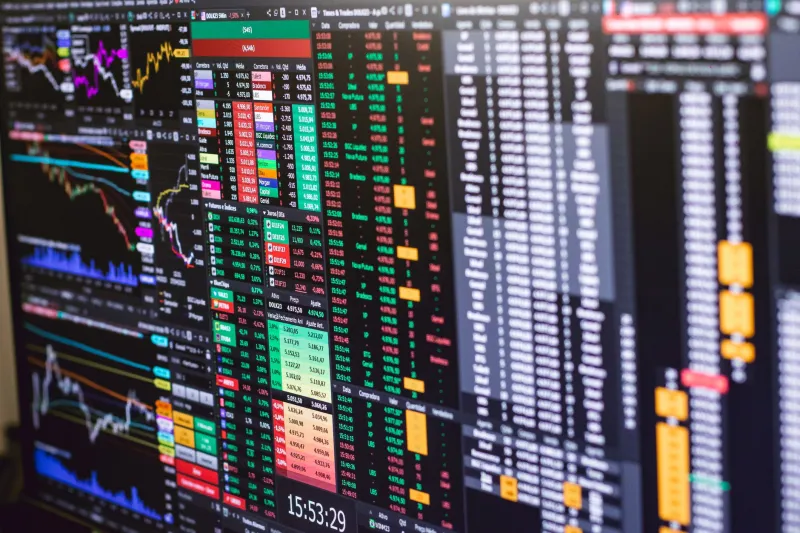
The Order Book Is Not What It Appears to Be
Most retail investors visualize the order book as a stable register of genuine buy and sell interest—a queue of patient participants waiting at stated prices. That mental model was reasonably accurate in an earlier era of slower, more transparent markets. Today, it is dangerously incomplete.
A significant portion of the quotes visible on any given order book at any given moment are not resting orders placed with the intention of executing. They are tactical placements—bids and offers positioned to gather information, influence price perception, or satisfy regulatory quoting obligations—that will be cancelled before they ever trade. High-frequency trading firms and certain institutional desks refresh their quotes thousands of times per second. The figure you see on your screen when you decide to act may already be obsolete by the time your order reaches the exchange.
This is not speculation. Academic research into order book dynamics consistently demonstrates that a large fraction of displayed liquidity at any price level evaporates within milliseconds of being posted. The book looks deep. The available liquidity is considerably shallower.
Layering and the Art of the Disappearing Quote
Beyond ordinary quote cancellation, a more deliberate practice known as layering compounds the problem for retail participants. Layering involves placing multiple orders across several price levels to create the visual impression of substantial demand or supply. When another participant moves toward those prices, the layered orders are rapidly withdrawn. The apparent liquidity was never real in any transactional sense—it was scenery.
Regulators at the SEC and FINRA have pursued enforcement actions against firms and individuals engaged in layering as a manipulative practice. Notable cases have resulted in significant fines and suspensions. Yet the underlying dynamic—sophisticated participants using order placement and cancellation to shape the information environment—remains a persistent feature of market microstructure. Enforcement addresses the most egregious conduct. It does not eliminate the structural asymmetry between participants who operate at machine speed and those who do not.
For a retail investor routing a limit order through a standard brokerage interface, the gap between the moment you click and the moment your order reaches the matching engine can be measured in tens or hundreds of milliseconds. In that interval, a great deal can change at the price level you targeted.
Queue Position and the Priority Problem
Even when genuine resting orders exist at your target price, a limit order placed by a retail investor typically enters the queue behind participants who arrived earlier. Most US equity exchanges operate on price-time priority: among orders at the same price, earlier arrivals execute first. A market maker or algorithmic participant that has been resting at a given price for seconds or minutes holds a queue position that your newly arrived order cannot displace.
If a stock trades at your limit price but only a limited number of shares change hands before the price moves away, the orders ahead of yours consume the available supply. You receive no fill despite the price having technically reached your level. The execution you were counting on never materializes.
This dynamic is especially pronounced in stocks with moderate liquidity—not the most illiquid micro-caps, but also not the deepest large-cap names. In that middle range, displayed depth can look sufficient while actual available fill at any given price level is limited to a relatively small number of shares.
Quote Stuffing and Latency Exploitation
A related phenomenon, quote stuffing, involves flooding an exchange's data feed with enormous volumes of order messages in rapid succession. The practical effect is to slow the processing of legitimate orders and degrade the quality of price information reaching other market participants. While exchanges and regulators have worked to implement safeguards, the technique illustrates a broader principle: in a market where speed is a competitive resource, participants with infrastructure advantages can shape conditions in ways that disadvantage slower participants.
Retail traders are, by definition, among the slowest participants in the modern equity ecosystem. This is not a criticism—it is simply a structural reality with practical implications for how orders should be constructed and timed.
What Professional Traders Do Differently
Experienced institutional and professional traders have developed several approaches to mitigate the execution gap that afflicts retail limit orders.
Midpoint pegging routes orders to dark pools or alternative trading systems where they execute at the midpoint of the national best bid and offer. Because these venues do not display orders in a public book, there is no opportunity for other participants to react to and withdraw from your price before execution occurs.
Iceberg and reserve orders allow larger participants to display only a portion of their intended size, reducing the information leakage that can prompt other participants to reprice away from them. Retail investors generally cannot replicate this advantage at meaningful scale, but understanding the mechanism clarifies why displayed book depth often understates actual interest.
Timing discipline is perhaps the most accessible tool for retail participants. Placing limit orders during periods of genuine two-sided flow—typically the middle of the regular session rather than the first or final minutes—reduces the probability that your order lands in a thin, fast-moving environment where quotes are unstable. Earnings releases, major economic data prints, and index rebalancing events create conditions where displayed liquidity is particularly unreliable.
Adjusted limit prices represent a pragmatic concession to market reality. Rather than placing a limit order at the precise price you would ideally pay, accepting a slightly less favorable price increases queue priority at a level where genuine resting interest is more likely to exist. The difference between your ideal price and your executable price is often smaller than the cost of a missed trade.
The Informed Investor's Takeaway
The mechanics described here are not designed to discourage the use of limit orders. Market orders carry their own significant costs, particularly in less liquid names, and the discipline of specifying a price remains valuable. The point is that a limit order is not a guaranteed reservation at a stated price. It is a conditional instruction operating within a complex, competitive environment where other participants have structural advantages in speed, information, and order sophistication.
Recognizing this distinction changes how you construct your orders, when you place them, and how you interpret the fills—or non-fills—you receive. The retail investor who understands that the order book is a dynamic, partially synthetic construct will make fewer assumptions about available liquidity and build more realistic execution expectations.
Markets reward participants who understand the rules of the environment they operate in. The rules governing modern order execution are less intuitive than they appear, but they are knowable. That knowledge is one of the more durable edges available to the self-directed investor willing to study the mechanics behind the prices on their screen.