The Price You Never See: How Off-Exchange Venues Quietly Reshape Every Trade You Make
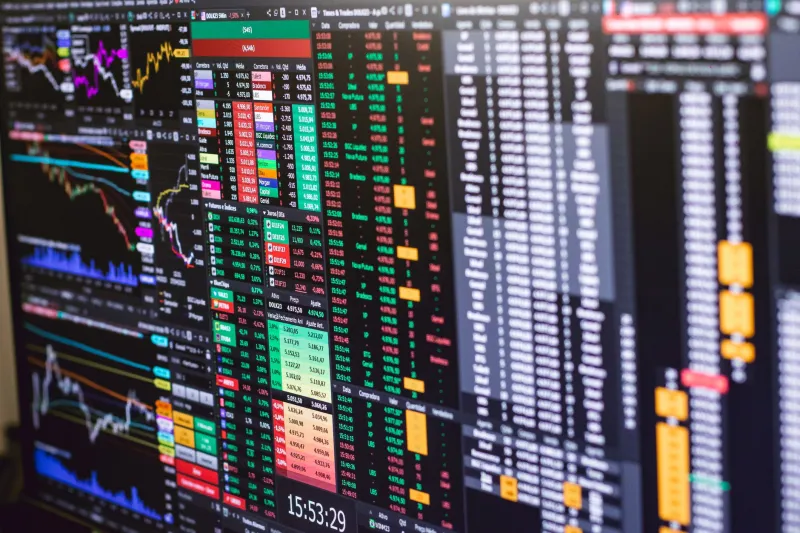
Most retail traders spend considerable energy analyzing charts, studying fundamentals, and refining their entry timing. What far fewer consider is what happens to their order in the fraction of a second between clicking the button and receiving a confirmation. That gap — invisible, instantaneous, and largely unregulated from the average investor's perspective — is where a significant portion of execution quality is determined. And in many cases, it is determined in your broker's favor, not yours.
The mechanism responsible for much of this dynamic is the dark pool, a phrase that sounds more dramatic than its technical definition warrants but carries genuine implications for anyone trading US equities.
What a Dark Pool Actually Is
A dark pool is an off-exchange trading venue that matches buyers and sellers away from the public order book. Unlike the New York Stock Exchange or Nasdaq, where bids and offers are displayed in real time, dark pools operate with pre-trade opacity. Participants submit orders, those orders are matched internally, and the resulting trades are reported to the consolidated tape — but only after execution, and often in aggregate.
These venues were originally designed to allow large institutional investors to execute block trades without telegraphing their intentions to the broader market. If a pension fund needs to purchase five million shares of a large-cap stock, displaying that order publicly would immediately push the price against them. Dark pools offered a solution: transact privately, report afterward, and avoid the predatory front-running that public order books invite.
That original purpose remains valid. The problem emerges when the same infrastructure is used to route retail orders — not to protect those traders, but to profit from them.
Payment for Order Flow and the Routing Decision You Never Make
In the United States, most retail brokerage accounts operate under a system called payment for order flow (PFOF). Under this arrangement, your broker sells the right to execute your order to a market maker or wholesaler — firms such as Citadel Securities or Virtu Financial — in exchange for a per-share rebate. The broker earns revenue; the wholesaler earns the spread.
The execution typically occurs off-exchange, in what are technically classified as over-the-counter trades or through affiliated dark pools. The wholesaler is required by regulation to provide "best execution," a standard that in practice means your fill must be at least as good as the National Best Bid and Offer (NBBO) at the moment of execution. Technically, this is often satisfied. Practically, it is a low bar.
The NBBO represents the best publicly displayed price at any given moment. But prices move in microseconds. Institutional traders operating in the same venues frequently have access to order flow data and faster infrastructure. By the time your order is filled at the NBBO, that price may already be stale relative to where the stock is actually trading. You receive a price that is technically compliant but economically inferior to what a direct-access trader with lit-market routing might have achieved.
How Institutional Traders Use Dark Pools Differently
The asymmetry here is worth examining carefully. Sophisticated institutional participants use dark pools defensively — to minimize market impact on large positions. They have the scale to negotiate access to multiple venues, the technology to monitor execution quality across those venues in real time, and the legal resources to push back against poor fills.
Retail traders, by contrast, are routed into off-exchange venues by default, without negotiation, without visibility, and often without awareness that the routing decision has even been made. The institutional investor chooses the dark pool. The retail investor is sent there.
This distinction matters because the same venue that protects a large buyer from adverse price movement can, when processing retail flow, function as a mechanism for extracting incremental value from orders that arrive with no negotiating leverage and no ability to monitor execution quality in real time.
Detecting the Hidden Cost
Measuring execution quality is possible, though it requires effort most retail traders do not take. The SEC's Rule 606 mandates that brokers disclose, on a quarterly basis, where they route customer orders and what payments they receive for doing so. These disclosures are publicly available on most broker websites, buried in compliance sections few investors ever visit.
A more direct measure is execution quality comparison. Some brokers provide per-order fill data that includes price improvement statistics — the degree to which your fill exceeded the NBBO at the time of execution. Reviewing these figures over a meaningful sample of trades can reveal whether your broker's routing decisions are working for you or against you.
Traders who use direct-access platforms and pay explicit commissions rather than relying on PFOF-based zero-commission models often report meaningfully better fills on active trades, particularly in fast-moving markets. The commission paid is, in many cases, less than the spread captured by the wholesaler under a PFOF arrangement.
Practical Steps for Execution-Conscious Traders
None of this suggests that dark pools are uniformly harmful or that retail traders are helpless. Several concrete adjustments can improve the quality of execution over time.
Use limit orders wherever practical. A limit order defines the price you are willing to accept and forces the execution venue to either meet that price or leave the order unfilled. It eliminates the wholesaler's ability to execute at the NBBO minus a fraction of a cent in their favor.
Evaluate broker routing disclosures. Rule 606 reports are not exciting reading, but the information they contain is directly relevant to your trading costs. Brokers that route a disproportionate share of orders to affiliated market makers warrant scrutiny.
Consider direct-access platforms for active strategies. For traders executing frequently or in size, the economics of explicit commissions with lit-market routing often outperform zero-commission PFOF models once execution quality is factored in.
Trade during peak liquidity windows. Spreads on most US equities are tightest during the first and last hours of the regular session, when volume is highest. Off-exchange fills during these windows are less likely to deviate meaningfully from public prices simply because the competitive pressure on market makers is greatest.
Monitor your average fill quality over time. A single trade tells you little. A hundred trades reveal whether your execution infrastructure is systematically costing you money before your thesis even has a chance to play out.
The Structural Reality
Dark pools and off-exchange execution are not anomalies or temporary inefficiencies. They are structural features of the US equity market, deeply embedded in the economic arrangements between brokers, wholesalers, and exchanges. Regulatory scrutiny has increased in recent years — the SEC has proposed reforms to PFOF and order routing transparency — but meaningful change moves slowly, and no rule change eliminates the underlying incentive misalignment between a broker's revenue model and a trader's execution interests.
The traders who consistently perform well over time are rarely those who ignore these mechanics. They are the ones who understand that the market begins charging them before the first candle forms on their chart, and who structure their approach accordingly.
Execution quality is not glamorous analysis. It does not generate the same conviction as a well-researched thesis or a clean technical setup. But in a market where edges are measured in basis points and compounded over hundreds of trades, the price you never see may be the most consequential price you pay.