Speed Is the Trap: How Market Orders Betray Retail Traders at the Exact Moment They Feel Most Urgent
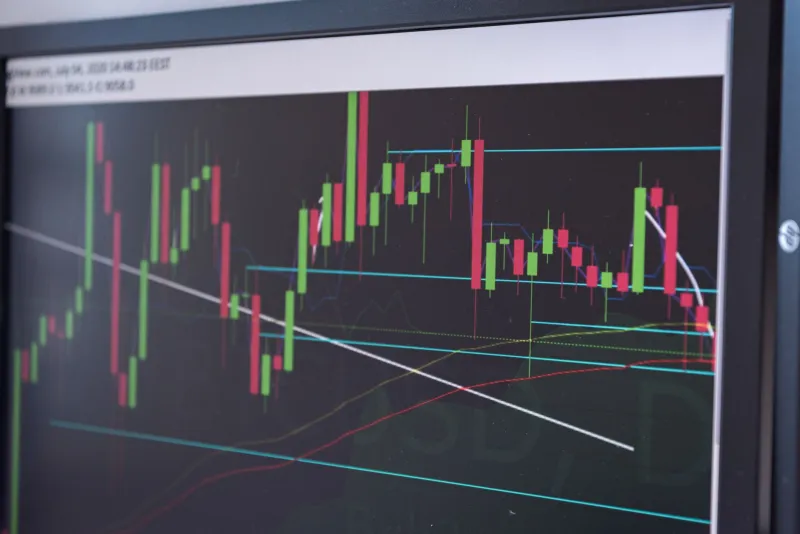
There is a particular kind of financial pain that arrives not from being wrong about a stock, but from being right about the need to act and then executing that action badly. It is the pain of watching a fill confirmation arrive on your screen — the trade you desperately needed — only to discover that the price you received bears almost no resemblance to the price you saw when you clicked submit.
This is not a glitch. It is not bad luck. It is the predictable, mechanical consequence of submitting a market order into a market that has temporarily ceased to function in the way most retail participants assume it always does.
The Illusion of a Price
The number displayed on your trading platform at any given moment is not a guarantee. It is a snapshot — a record of the last transaction that occurred, which may have taken place fractions of a second ago or, during moments of genuine stress, considerably longer. The bid-ask spread visible on your screen reflects the best available prices at that precise instant, but the moment you submit a market order, you are no longer buying or selling at that price. You are buying or selling at whatever price the market is willing to offer you when your order actually reaches the execution queue.
During normal, low-volatility sessions, the gap between what you see and what you receive is negligible. A few cents on a mid-cap stock. Easily dismissed. But during the conditions that most frequently trigger the impulse to submit a market order — an unexpected earnings miss, a Fed announcement that surprises consensus, a geopolitical shock that hits while the market is already thin — that gap can expand dramatically. This expansion is slippage, and it is one of the most underappreciated costs in retail trading.
How Liquidity Actually Disappears
Liquidity is not a fixed resource. It is a behavioral phenomenon. Market makers — the firms and algorithms that sit on both sides of the order book, continuously posting bids and offers — are not obligated to maintain those quotes during periods of elevated uncertainty. When volatility spikes, the rational response for a market maker is to widen spreads aggressively or withdraw from the book entirely. Their business model depends on capturing the spread across thousands of transactions. It does not depend on absorbing your panic at a price that could move another two percent against them before they can hedge.
This is not manipulation. It is rational risk management by sophisticated participants. But the consequence for the retail trader who submits a market order into a suddenly thin book is severe. With fewer resting limit orders available to absorb the trade, each successive fill occurs at a worse price. A 1,000-share market order that might execute within a penny of the quoted price during a calm afternoon can walk down — or up — the order book by a meaningful percentage during a volatile open or a news-driven spike.
The traders who profit from this dynamic are not passive bystanders. Certain algorithmic strategies are specifically designed to detect order flow imbalances — clusters of market orders arriving in rapid succession — and position ahead of them. By the time your market order reaches the exchange, a portion of the available liquidity at the prices you expected may have already been consumed or repositioned.
Recognizing When the Book Has Gone Hollow
Before submitting any market order, particularly during conditions that feel urgent, there are observable signals that can reveal whether the liquidity you are counting on actually exists.
Bid-ask spread width is the most direct indicator. On a heavily traded large-cap stock like Apple or Microsoft, a spread measured in single cents during regular hours is normal. If you observe that same spread widening to ten, fifteen, or twenty cents, the book is under stress. Executing a market order into a widened spread means you are already beginning your trade at a disadvantage before slippage even enters the calculation.
Level 2 order book depth provides additional context. A healthy book shows meaningful size stacked at multiple price levels on both sides. A stressed book shows thin, scattered size with large gaps between price levels. Many retail brokerages in the US now provide access to this data either natively or through integrated platforms. Learning to read it takes minutes. The cost of ignoring it can be measured in real dollars.
Time of day matters more than most retail traders appreciate. The first fifteen minutes after the market opens and the final fifteen minutes before the close are structurally the most volatile periods of the regular session. Liquidity concentrates unevenly during these windows. Executing market orders during these periods, particularly on news-driven moves, compounds every other risk factor simultaneously.
Pre-market and post-market conditions deserve special mention. Extended-hours trading operates with a fraction of the liquidity available during the regular session. Market orders submitted outside of regular hours — or limit orders with parameters set during extended hours — can result in executions that would be nearly unrecognizable to the trader who set them.
The Discipline of the Limit Order
The structural antidote to slippage is the limit order. By specifying the maximum price you are willing to pay, or the minimum price you are willing to accept, you remove the market's ability to fill you at an arbitrary price. You retain control of the transaction terms.
The objection most traders raise immediately is the risk of non-execution — that a limit order placed during a fast-moving market will simply not fill because the price passes through your level without enough volume to match your order. This is a legitimate concern. But it requires honest reframing: the alternative is not a guaranteed fill at the price you wanted. The alternative is a guaranteed fill at a price you did not choose, determined entirely by whoever happens to be on the other side of the book at that moment.
For traders who genuinely require immediate execution — those managing positions with defined stop-loss levels or hedging against a rapidly deteriorating situation — the appropriate response is not to abandon limit orders but to set them aggressively. A limit order placed a reasonable distance through the current market price has a high probability of filling quickly while still capping the worst-case execution cost.
Urgency Is a Market Condition, Not a Strategy
The deepest lesson embedded in the mechanics of slippage is not technical. It is psychological. The feeling of urgency that drives a retail trader to click the market order button without reviewing the spread, without checking depth, without considering the time of day — that feeling is itself a signal worth examining.
Professional traders do not operate without pre-defined execution frameworks. They determine, in advance, under what conditions they will exit a position, at what price levels, and using what order types. When those conditions arrive, execution becomes mechanical rather than emotional. The decision was already made. The only variable is the order structure.
Retail traders who develop the same discipline — who decide before the market opens how they will handle a gap down, a missed earnings print, or a sudden sector rotation — will find that the urgency diminishes. Not because the market becomes less volatile, but because the response has already been planned.
The liquidity mirage is most dangerous to the trader who has no plan and suddenly needs one. Speed, in those moments, is not an advantage. It is a cost being extracted by a market structure that was never designed to reward panic.